Piano Foundations
Technique, expression and theory — from your first notes to late intermediate, on a professional practice app.
An in-depth piano course with a holistic approach to technique, musicianship and theory: step-by-step guidance from a concert pianist and experienced teacher whose lessons and courses have reached thousands of students worldwide, paired with a professional practice app that gives you innovative tools for the fastest progress.
It is built directly on the library of piano-tree.com, one of the leading apps for learning piano, so every lesson points to pieces inside the app, and every piece comes with tools that make practice faster, smarter, and more fun.
Over this course you travel the full arc — from your very first steps to a confident late-intermediate level — growing in repertoire and in theory together, so nothing is left behind along the way.
That journey takes most people several years. So the course is yours for life — learn at your own pace, and come back to any lesson whenever you need it.
One year of full access to piano-tree.com*
Your enrollment includes a full year of full access to Piano Tree, a $100 value on its own, at no extra cost.
* If you already have a piano-tree.com subscription, your access is automatically extended by one more year.
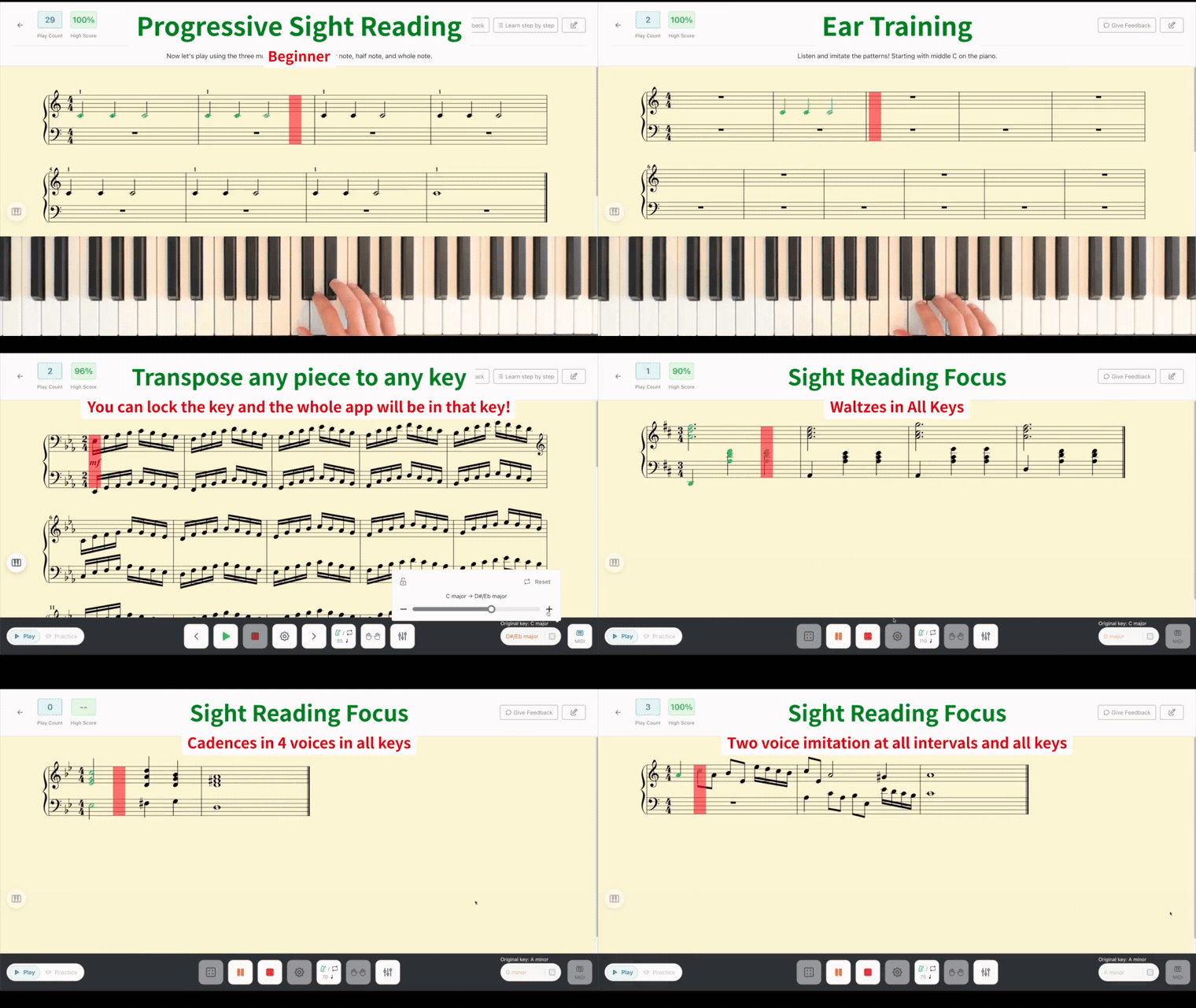
- ♪Over 12,000 pieces — from your very first melodies all the way to intermediate repertoire.
- ♪Wrong-note detection — the app hears what you play and shows you what went wrong.
- ♪Transposition — play any piece in any key, and understand the keyboard instead of memorizing it.
- ♪Practice by section or by hand — loop a hard bar, work hands separately, then put it together.
- ♪Professional sight-reading training — built on the strategies real musicians use.
- ♪A virtual keyboard for the notes you are still unsure about — so reading never blocks your playing.
- ♪Ear training — learn to recognize what you hear, not just what you read.
- ♪Targeted focus packs — dedicated sections for counterpoint, jazz, tango, technical exercises and more, so you can drill a specific genre or skill.
Guided step by step, from your first notes to intermediate repertoire
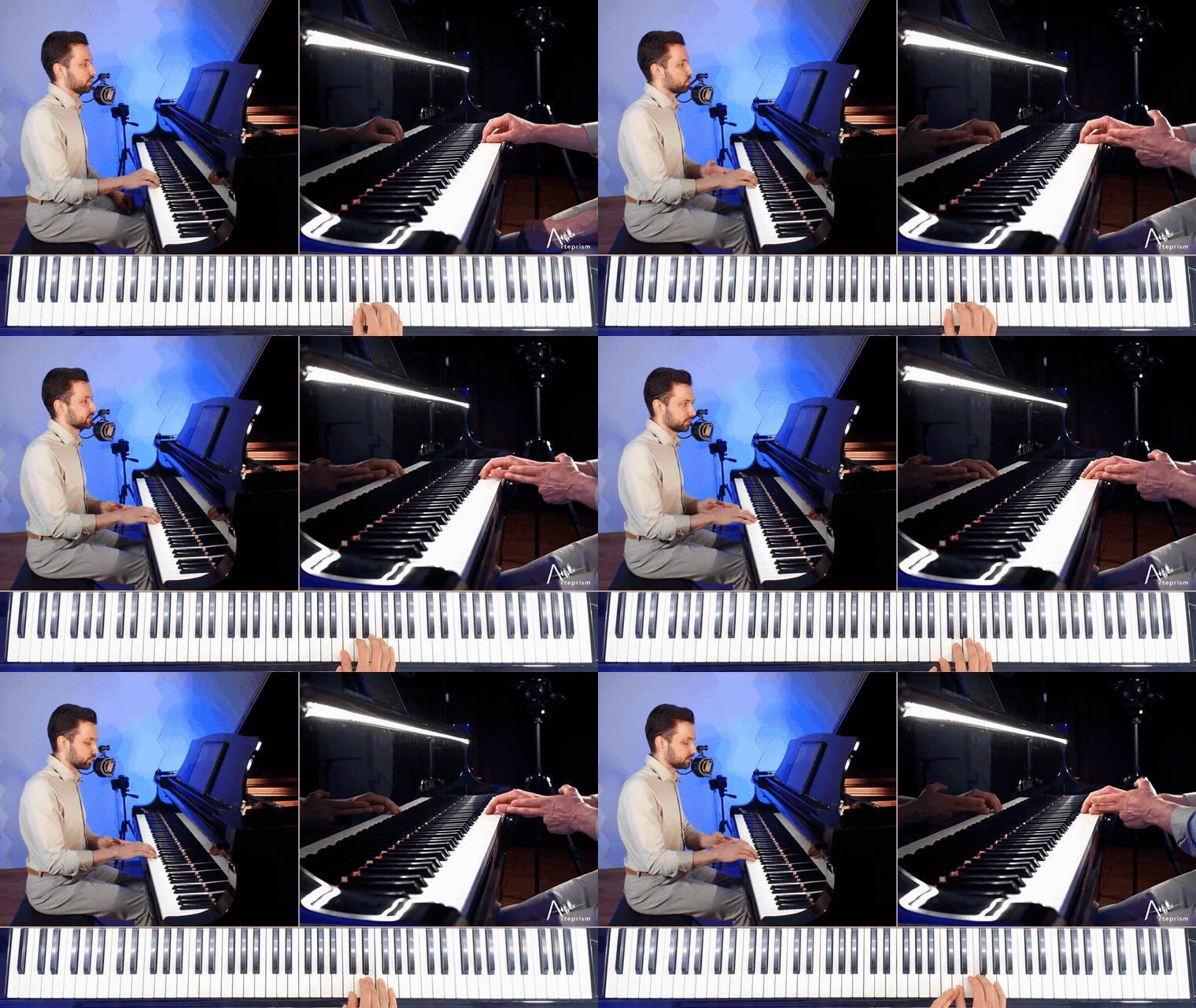
Denis Zhdanov guides you through the repertoire step by step — from the very first levels up to well-loved intermediate pieces like Satie’s Gymnopédie, the well-known easy Bach pieces, and beyond.
Nothing is skipped. Every fundamental skill is covered from the beginning, in the order that makes sense, so that by the end you are playing beautiful music with a healthy, robust technique, deep understanding and profound musicality.
Stepan Sobanov, a composer and experienced teacher of music theory, designed the theory curriculum specifically for this course — from the very first fundamentals all the way to a solid intermediate level. This way, your understanding of the language of music grows hand in hand with your technical and expressive skills.
A closed group for students of this course
Learning piano can be a lonely thing, and motivation is often half the battle. So every student gets access to our closed Facebook community, and it quickly becomes one of the best parts of the course.
Post your recordings and learn from one another, get my feedback on your playing, and take part in the challenges I run for the group. It’s also simply a great place to meet people who love the same thing you do, and make a few friends along the way.
Your body
You learn to notice what your body is doing before you build habits you will have to undo later. Good hand position and healthy movement come first — so poor technique never becomes a ceiling on your playing, or a source of pain in your hands.
Your technique
You study the main types of piano technique and learn to coordinate your movements. The goal is not speed for its own sake — it is a technique that grows in a healthy way, and keeps growing.
How to practice
The skill almost every beginner is missing. From the very first lessons you get clear, step-by-step strategies: how to approach a new piece, what to repeat and what to leave alone — so your time at the piano turns into progress instead of disappearing.
Your musicianship
Expression is not something you add later. From the first lessons you work on phrasing and sound, learning to tell the difference between tension in the music and tension in your body — and to build expressive interpretations while staying physically free.
Your understanding
The theory lectures take you from the very first basics to intermediate-level concepts, teaching you the language of music so you always know why the notes do what they do.
What each module offers
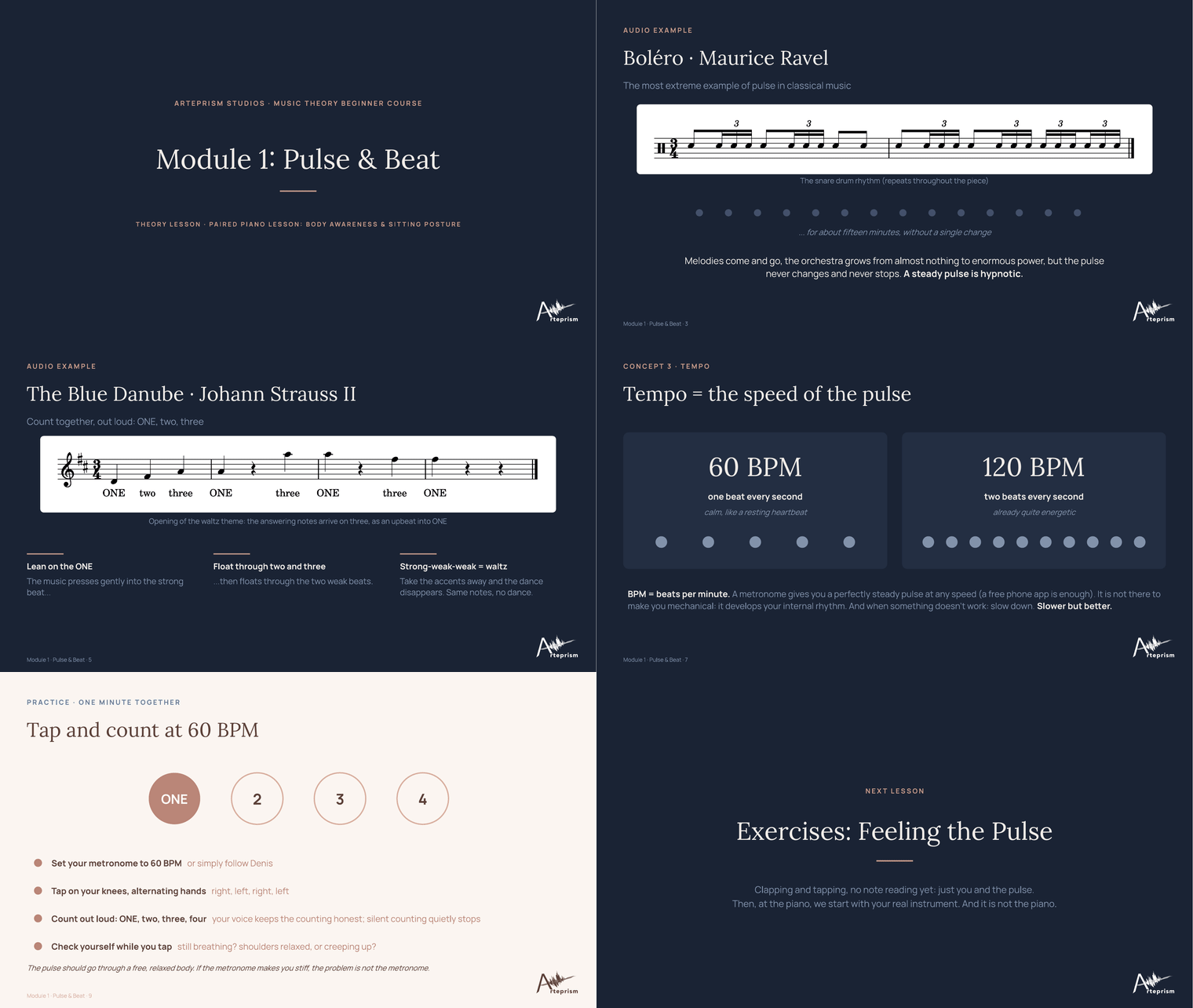
Theory
A comprehensive presentation on one particular topic, explained clearly and connected directly to the music you are working on.
A piano lesson
Step-by-step guidance on building efficient technique and healthy playing habits. You also learn how to structure a practice session for the best results, along with in-depth guidance on musicality.
Extra exercises
More material on the same topic: pieces from the app that train exactly the technique you just learned.
The community
A place to share what you are working on and post a recording, so you get feedback, swap experience with fellow students, and stay motivated as you go.
So instead of practicing at random, you work intensively on one skill at a time — from multiple angles — until it is truly yours.
Lifetime access to the course
You get lifetime access to the course and one year of full access to piano-tree.com.*
The course covers everything from your first steps to late-intermediate repertoire — a journey that takes most learners several years. You should never be rushed through it by a countdown, so there isn’t one: the lessons stay yours, and you can return to any of them whenever a piece asks you to.
And the course keeps growing. Denis continues to add new video lessons throughout the year — more pieces, and more types of technique, for beginners and intermediate players alike. Everything new is included in your access, at no extra cost.
You can even request a specific piece from the Piano Tree library: if you would like a lesson on something you are working on, tell us, and we will consider filming it.
Want to keep practicing in the app beyond your first year? You can extend your app access anytime, directly at piano-tree.com.
* If you already have a piano-tree.com subscription, your access is automatically extended by one more year.
By purchasing the course, you agree to share your name and email with Piano Tree Limited for account registration purposes.
Curriculum
- THEORY: Intervals Part 1 – 2nds, 3rds, 4ths & 5ths (11:35)
- Forearm Rotation Left Hand. Czerny Op. 139 No. 9 (17:48)
- Forearm Rotation Right Hand. " More Variations on La Folia" (14:05)
- Parallel Thirds Non-legato. "5 Stars In Thirds" (9:52)
- Parallel Thirds Legato. "The Third Day" (14:18)
- Homework Assignments
- THEORY: Tempo, Dynamics & Musical Expression (9:42)
- Bach: Musette Part 1 (13:52)
- Bach: Musette Part 2 (9:58)
- Bach: Minuet in G Minor. Part 1 (15:24)
- Bach: Minuet in G Minor. Part 2 (7:22)
- Eric Satie: Gymnopedie No. 1. Part 1 (19:13)
- Eric Satie: Gymnopedie No. 1. Part 2 (17:35)
- Eric Satie: Gymnopedie No. 1. Part 3 (10:07)
- Homework Assignments
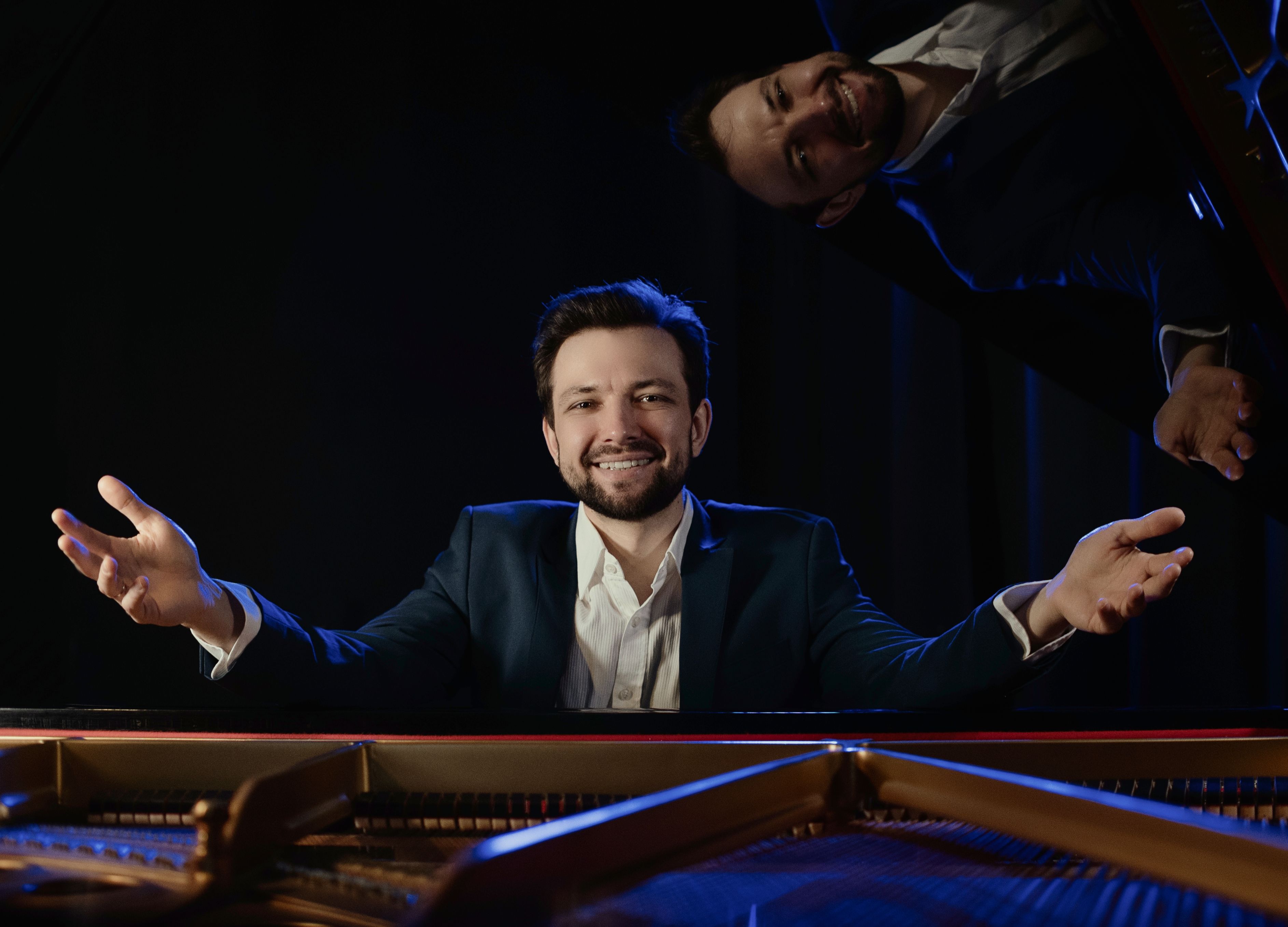
Denis Zhdanov
Denis Zhdanov is a Ukrainian pianist currently living in Austria. He has built a strong reputation in the world of classical music through his success in several international competitions and his work as a concert performer.
Alongside his performing career, Denis is deeply committed to piano teaching. His approach goes beyond style and musicality, with a particular focus on helping pianists develop efficient, healthy, and reliable playing techniques.
Denis has worked with students from all over the world, helping them improve and rebuild their piano technique, reduce unnecessary tension, recover from piano-related injuries, and develop more effective practice and learning strategies. His teaching takes a comprehensive approach, supporting pianists who want to improve their skills, overcome technical challenges, and reach their full potential.
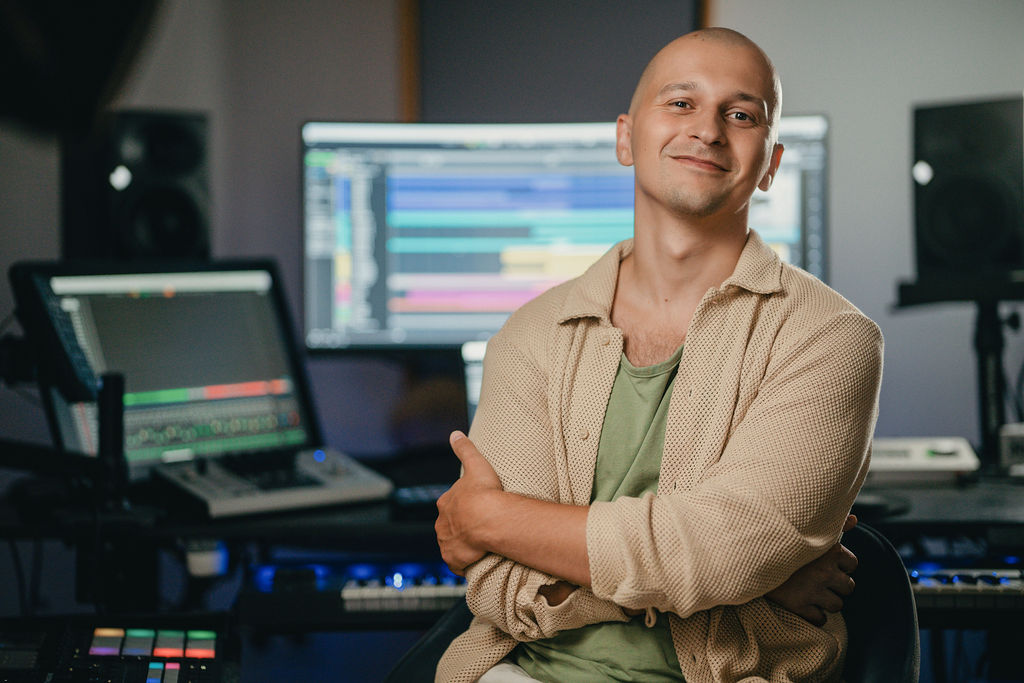
Stepan Sobanov
Stepan Sobanov is a Vienna-based composer, arranger and music theory specialist. He studied Composition and Music Theory at the University of Music and Performing Arts Vienna (mdw), graduating with a Mag. art. in Media Composition and Applied Music, and has since worked across film, games and the concert stage, including arrangements for Nadine Sierra, Pretty Yende and Hyung-ki Joo.
Teaching is central to his work. At the Vienna Music Institute he lectured in Composition and Arrangement, Musical Form and Structural Analysis, and Media Composition. His approach is practical: theory is a tool for hearing more, playing better and writing with intent, not a set of rules to memorize.
Frequently Asked Questions
How much should I practice?
Any amount of practice is better than none. But if you want to progress noticeably, aim for at least one hour, six days a week, throughout your first two years. After that, two to three hours a day if your goal is the great romantic masterworks, such as the Chopin études.
Quality matters more than you think: 30 focused minutes in the morning usually bring more than 1.5 tired hours after work or school. Use a timer, and split each session into a chain of small goals and tasks.
A good way to divide your time:
- 10–15% sight-reading
- 10–15% ear training and solfège
- 30% technique-oriented exercises and repertoire
- the rest: your current repertoire pieces
How do I know if a piece is at my level?
Start with something that feels easy. How you play, and the habits you build, matter far more than how hard the piece is. At this stage, difficulty usually just means tense shoulders and high, tight wrists.
Stay at a comfortable level, playing pieces of that difficulty until they feel genuinely easy. We suggest suitable pieces in the homework section, but stay curious and explore the huge Piano Tree library yourself. If a piece in a lesson feels too hard, choose a similar one with the same features and apply the lesson’s tips to the easier piece.
If you practice a piece for a week and feel no improvement, it is either too hard or you are not practicing efficiently. Either way, don’t hesitate to share your concerns and ask questions in our Facebook group.
Can I get a refund for the course?
Yes. You can request a refund within 14 days of purchase. If you take the refund, you will lose access to both the course and the promotional year of the Piano Tree app.
How do I get access to the app?
After your purchase, Piano Tree will send you two emails with tutorials and your one-time login credentials. Please allow a few hours for them to arrive, and check your spam and promotions folders. If nothing shows up, contact Piano Tree support.
I’m having problems with the app. What should I do?
For any technical issue with the app, please contact Piano Tree’s support team. We set up your app access automatically, but the app’s functionality and technical support are handled by its developer, Piano Tree. Our team cannot resolve app-related technical issues directly.
Will I receive feedback on my playing?
We run a private Facebook group where we organize challenges, share experience, and give feedback to participants. We strongly encourage you to join and take part in these activities.
Denis Zhdanov also keeps an eye on questions in the group and does his best to give individual feedback whenever he can. Please note that personal feedback from Denis is not guaranteed for every question or submission.
I can log in, but the course videos won’t play.
This is almost always a browser issue. Please try these steps in order:
- Disable any adblocker or anti-tracking extensions. On Chrome, turn off Norton Anti Track or similar; on Firefox, go to Settings, then Privacy & Security, and set Tracking Protection to Standard (not Strict).
- Clear your browser cache.
- Open the course in a private (incognito) window.
- Update your browser to the latest version.
- Try a different browser (we recommend Google Chrome or Mozilla Firefox).
- Try a different network connection.
If none of that helps, Teachable Support can assist you directly. Just open a ticket here.
Other courses

What Our Students Say
Testimonials
Eric
The piano rebuilding course has made a world of difference to me. I can now study the pieces I like without any pain in my hands and forearms. I was ready to give up piano altogether when I bought the course — and now I play more than ever.
Terry
Your course is the single most valuable collection of piano instruction I have ever seen, and it has substantially improved my playing over the last year. The relaxation and efficiency techniques are demonstrated again and again, until the proper way to practise them is thoroughly ingrained. You are a phenomenal teacher.
Pasquale
Denis's course is truly excellent: clear, in-depth explanations of all the fundamental techniques, along with practical work on real pieces. For those getting back into piano without a teacher, it isn't just an alternative — it's a complete and structured path. Within a few months I built a 30-minute repertoire of pieces I can play from start to finish.
Henrik
Believe me, this course is worth its weight in gold. After only a few days I could already feel that I play differently, with more freedom in my fingers and arms. And it would cost far more to get this from a professional piano teacher anyway.
Jonna
This is the course that has improved my playing the most in the shortest time — and I haven't even finished it yet. Bach really works magic on one's technique, and it transfers to other composers and styles as well. A great teacher.
Vicki
I've learned so much. The patient, bar-by-bar teaching style has helped me become much more confident in the piece. Analyzing the chords behind the melodies and working out hand positions goes miles towards better memorization. So glad I found this site.
Susanne
I'm retired and teaching myself to play the piano. The step-by-step breakdown of these wonderful exercises, combined with the tips on body, hand and finger movement and the analysis of the harmonies, is so welcome and so helpful.
Juan
I'm over 70 and pretty much a total beginner. In just two months I've made great progress: the course has helped me relax more, loosen up my arms and — most importantly — stay motivated to keep going.
Jesse
This is hands down the best lesson I have seen for learning this difficult piece. Every tip addresses a specific challenge — maintaining relaxed, comfortable sensations and releasing tension after each chord, even when the music feels like taming a wild horse. Bravo!
Maddie
A wonderful and educational course! I totally recommend it to anyone who needs an in-depth masterclass on this piece. Thank you, Maestro Denis.