The Course
Piano Technique Mastery Course
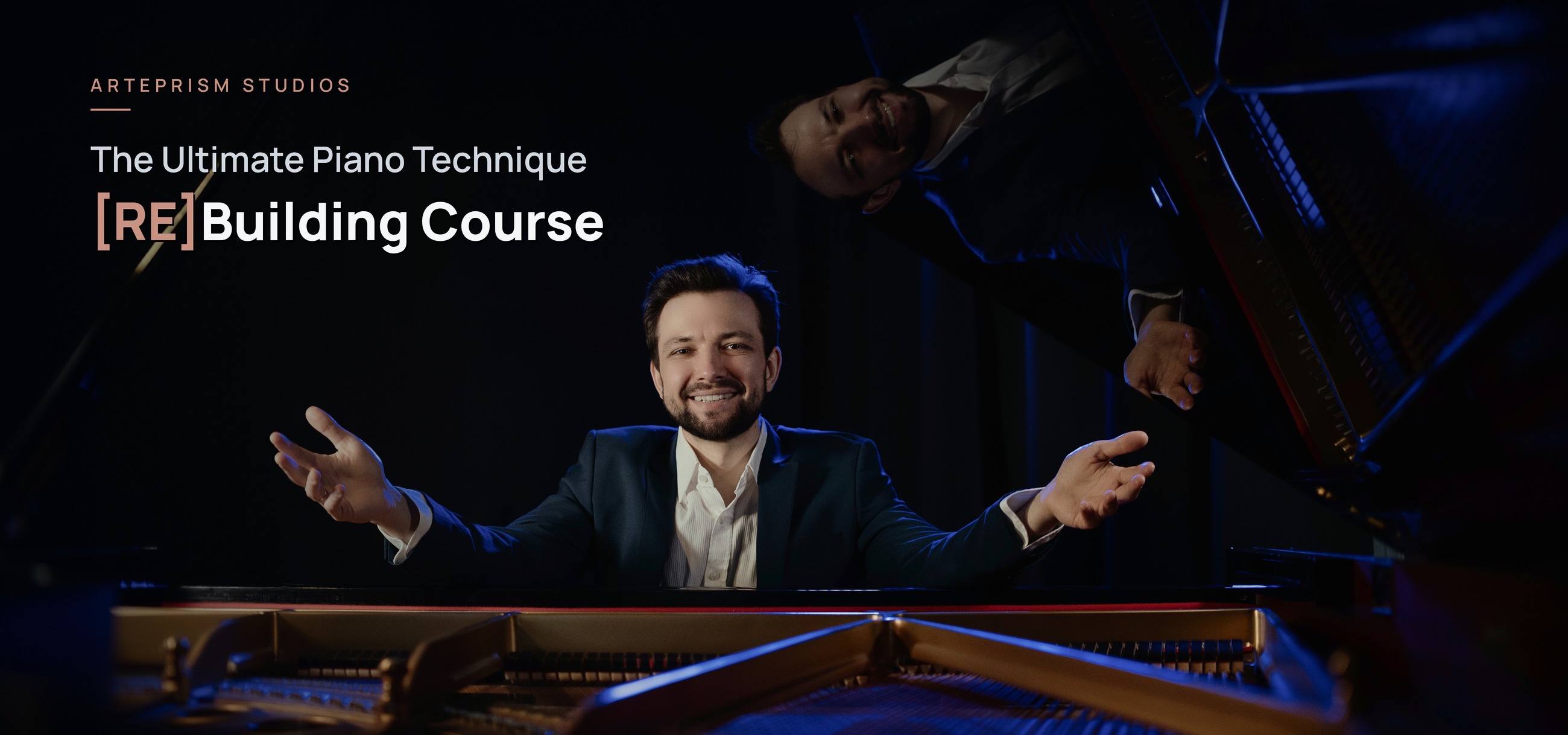
Welcome to a transformative piano learning experience. This course is not just a set of lessons; it’s an ultimate system designed to build or rebuild your piano-playing technique from the ground up. Whether you’re starting fresh or refining years of experience, this program provides the tools and guidance to unlock your full potential as a pianist.
Who is this course for?
This course is tailored for ambitious piano learners who:
- Can dedicate at least 1 hour a day to piano practice.
- Know the basics of piano playing / can read notes.
- Are seeking a structured path to maximize their skills.
- Wish to develop a safe, sustainable, and effective technique.
- Want to overcome technical limitations or recover from piano-related injuries.
It’s suitable for late beginners looking to establish proper technique, as well as advanced pianists encountering challenges or seeking deeper refinement.
Curriculum Highlights
What You Will Learn
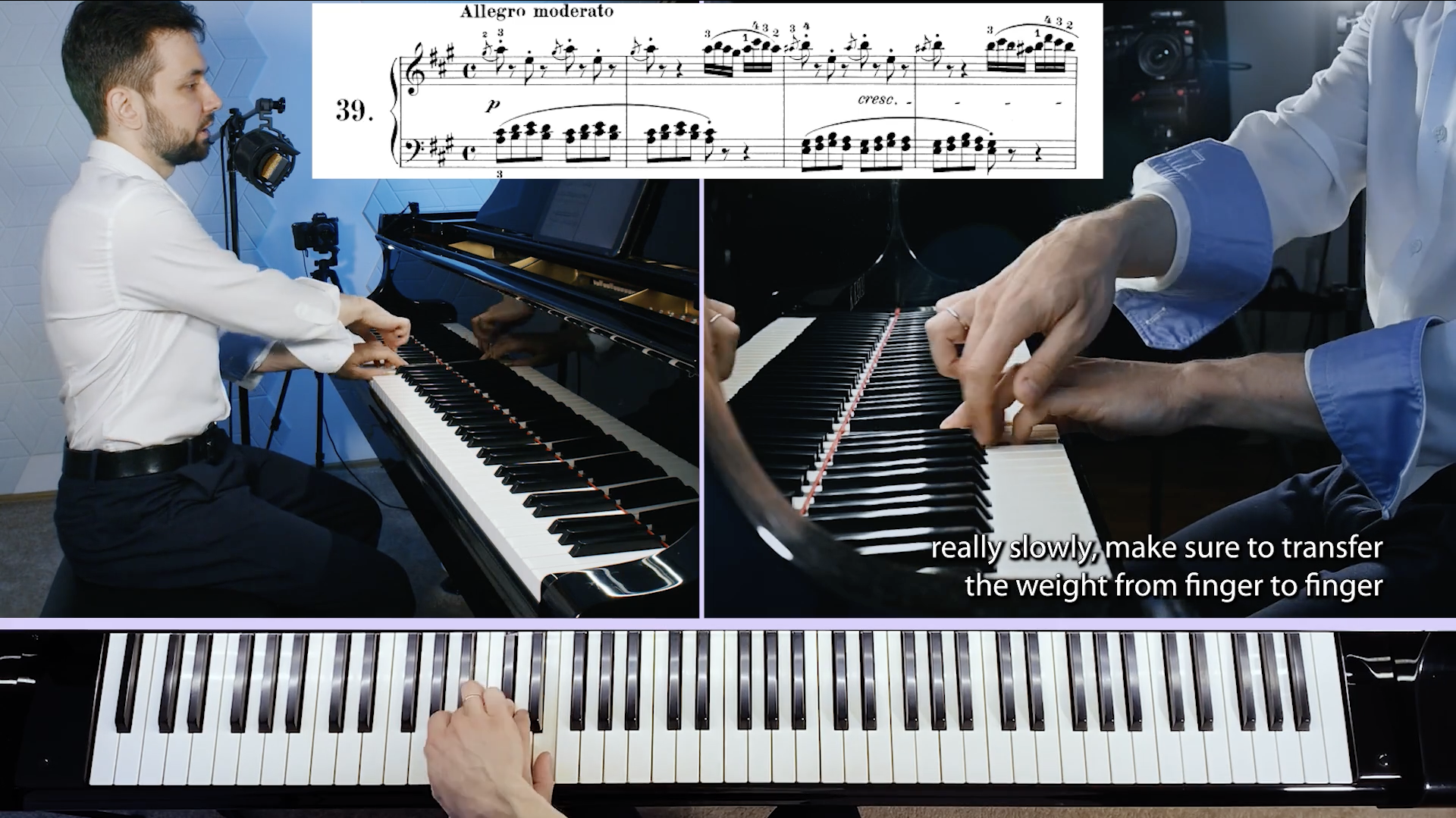
This course breaks down the art of efficient piano playing into actionable steps and covers:
- Hand and sitting position
- Use of gravity and tension management
- Relaxation and finger strengthening
- Whole-arm coordination
- Dexterity boosters and universal learning strategies
- Training in octaves, thirds, scales, arpeggios, repeated notes
- Techniques for playing softly but quickly, mastering trills, and more
Advanced learners will benefit from a dedicated section featuring detailed tutorials on 10 of Chopin’s etudes from Op. 10 and Op. 25, as well as 5 famous works of Rachmaninoff.
The Method
How You Will Learn
Each concept is introduced using pieces suitable for late beginners, with additional advanced examples for intermediate and advanced pianists. You won’t just practice exercises; you’ll apply techniques to excerpts from inspiring works by composers such as Bach, Mozart, Scarlatti, Beethoven, Chopin, Rachmaninoff, Tchaikovsky, and more.
The course includes subtitles in English, French, Portuguese, and Italian for a more accessible learning experience. A direct link to free PDF scores is provided for your convenience, and text summaries help you organize and retain key concepts. Enjoy lifetime access to all course materials — learn at your own pace, without time limits.
Personalized Feedback from Me
I guarantee that 95% of your possible questions about piano-playing technique will be answered within this course. To make it even more valuable, I offer personalized feedback to every enrolled student. Submit a link to a short recording in the comments section, and I’ll provide video or text feedback tailored to your specific needs and goals.
How to Submit Your Recording
- Please wait at least 30 days after purchasing before submitting, so you have time to watch the lessons and practice the foundational techniques.
- If a specific technique gives you trouble, watch the relevant lesson first and practice for 7–14 days. If the issue persists, submit a short recording in that lesson’s comments.
- Feel free to record just your hands and arms — no need to reveal your face. Recordings and feedback are shared publicly in the comments so the whole community can learn together.
Course Duration
The program provides a clear structure for 4–8 months of focused practice, offering step-by-step guidance to ensure steady progress.
Curriculum
- FOUNDATION: Gravity Usage & Hand Position (8:24)
- (Beginner) Improve Gravity Usage Skills - Bach Little Prelude 1 (14:00)
- Bach Little Prelude No. 1 - Slow Demonstration (4:07)
- Bach Little Prelude No. 1 - Target Tempo (1:19)
- (Beginner) - Inverted Chords Training | Gravity Usage Training (6:10)
- (Late Beginner-Intermediate) Gillock - Seascapes (19:39)
- (Intermediate) Tchaikovsky - Little Horseman (14:26)
- Tchaikovsky Little Horseman - Efficiency (3:41)
- Tchaikovsky Little Horseman - Polishing the Piece (3:17)
- ❗BONUS: Loud but Noble Playing❗ (14:42)
- Single and Double Forearm Rotation in Piano Technique: My Understanding (7:04)
- FOUNDATION - Elbow Micro-Impulses (alternative to the previous) (9:19)
- FOUNDATION - Three stages of playing a note (16:51)
- FOUNDATION - Tension in Piano Playing (7:21)
- Bach - Small Prelude | Slow Demonstration (1:26)
- Tension-Release | Mastering the skill (14:08)
- FOUNDATION - Move Smoothly Between Positions (9:34)
- (Intermediate) - Grieg "Elfentanz" (9:57)
- (Intermediate/Advanced) - Burgmüller & Chopin Etudes Examples (9:36)
- FOUNDATION - Valse Accompaniments, Chopin Valse B.150 (24:05)
- BONUS: Momentary Release Technique by Elina Akselrud (21:42)
- FOUNDATION - Forearm rotation (21:05)
- FOUNDATION - In-Out Motions (14:56)
- In-Out Motions: General Rules (11:34)
- (Beginner) In/Out, Rotation | Czerny op. 849 No.1-4 (16:30)
- (Beginner) In/Out, Rotation, Alberti Bass | Czerny op. 849 No.5-10 (14:41)
- (Beginner) - Forearm Rotation | Schumann Two Pieces from op. 68 (11:01)
- (Intermediate) - Bertini Etudes op. 29 No. 8&11 (5:30)
- (Intermediate) - Schubert Scherzo in Bb major (10:51)
- (Intermediate) - Lemoine Etude in E minor (12:38)
- (Intermediate) - Burmüller Etudes op. 100 No. 21 & 7 (10:12)
- (Intermediate) In/Out Motions | Grieg Popular Melody op. 38 no. 2 (7:50)
- (Intermediate) Burgmüller Etude op. 109 no. 6 (3:23)
- (Intermediate/Advanced) - Schumann Papillons op. 2 (4:07)
- (Intermediate/Advanced) - Mozart Sonata in A minor K.310 (12:37)
- (Advanced) ROTATION - Beethoven Sonatas: Pathetique, Moonlight, Appasionata (18:28)
- (Advanced) In/Out Motions & Alberti Bass | Beethoven Moonlight (6:28)
- (Advanced) Brahms Concerto no. 1 (4:42)
- (Advanced) Schumann Toccata op. 7 (3:32)
- SKILL: Scales (25:17)
- Further Scale Practicing Tips (9:36)
- SKILL: Short Arpeggios Training (11:37)
- FOUNDATION: Arpeggio Position Changes When Going Up (10:40)
- FOUNDATION: Arpeggio Position Changes When Going Down (3:17)
- 11 Types of Arpeggio - learning the notes (11:34)
- FOUNDATION - Long Arpeggios | Motion Coordination | 11 Types of Arpeggio (13:48)
- 11 types of arpeggio - Other keys Tips (1:17)
- (Intermediate) Concone Etude op.30 No.20 (3:43)
- SKILL: Arpeggio with a repeated Note | Beethoven & Chopin (18:21)
- SKILL: Open Chord Position Arpeggios - Concone Etude op.30 no.19 (13:47)
- BONUS: A PDF with complete Scales and Arpeggios
- Study 1 | ➡️ SCORE PDF ⬅️ (10:46)
- Study 2 (3:46)
- Study 3 (8:42)
- Study 4 (3:16)
- Study 5 (4:34)
- Study 6 (4:40)
- Study 7 (1:40)
- Study 8 (3:26)
- Study 9 (1:07)
- Study 10 (1:14)
- Study 11 (4:34)
- Etude No. 1 "Origami Swan" | ➡️ SCORE PDF ⬅️ (17:29)
- Etude No. 2 "Distant Dialogue" (15:54)
- Denis plays Two Etudes by Frederic Viner (2:48)
- SKILL: OCTAVES | Bertini op. 29 no. 22 (20:33)
- Octaves with Small Hands by Elina Akselrud (10:07)
- (Intermediate) Bertini op. 29 no. 21 (11:27)
- (Intermediate) Concone op. 30 no. 6 - Octaves (11:22)
- (Intermediate) Schumann Papillons op. 2 (18:34)
- (Advanced) Verdi-Liszt Rigoletto (10:49)
- (Advanced) Liszt Hungarian Rhapsody no. 6 (15:47)
- (Advanced) Schubert-Liszt Erlkönig (22:37)
- Introduction, Score, Additional Links
- Chopin Etude op. 10 no. 3 (27:12)
- Chopin Etude op. 10 no. 5 (19:31)
- Chopin Etude op. 10 no. 8 part 1 (11:20)
- Chopin Etude op. 10 no. 8 Part 2 (19:23)
- Chopin Etude op. 10 no. 9 (10:40)
- Chopin Etude op. 10 no. 12 (24:01)
- Chopin Etude op. 25 no. 1 (12:54)
- Chopin Etude op. 25 no. 6 (17:28)
- Chopin Etude op. 25 no. 10 (22:18)
- Chopin Etude op. 25 no. 11 (24:43)
- (Late Intermediate-Advanced) Prelude op. 3 no. 2 in C# minor (23:32)
- (Advanced) Rachmaninoff Prelude in G minor op. 23 no. 5 Part 1 (16:12)
- (Advanced) Rachmaninoff Prelude in G minor op. 23 no. 5 Part 2 (14:16)
- (Advanced) Rachmaninoff Etude-Tableaux op. 39 no. 1 (20:12)
- (Advanced) Rachmaninoff Etude-Tableau op. 39 no. 3 (16:40)
- (Advanced) Rachmaninoff Etude-Tableau op. 39 no. 5 Part 1 (16:29)
- (Advanced) Rachmaninoff Etude-Tableau op. 39 no. 5 Part 2 (17:15)
The Philosophy
My Unique Approach
My method integrates:
- The best Western systems for efficient piano playing.
- Eastern principles for expressive and profound artistry.
- My personal discoveries, shaped by a diverse performing and teaching career.
- A love for analysis and self-observation.
This deep and meticulous work led me to fundamentally change my piano-playing approach. I began using piano practice as a form of physiotherapy — turning proper technique into a tool for recovery rather than a source of damage. This transformation not only revitalized my own playing but also profoundly enhanced my ability to teach.
Why Choose Me
My Story
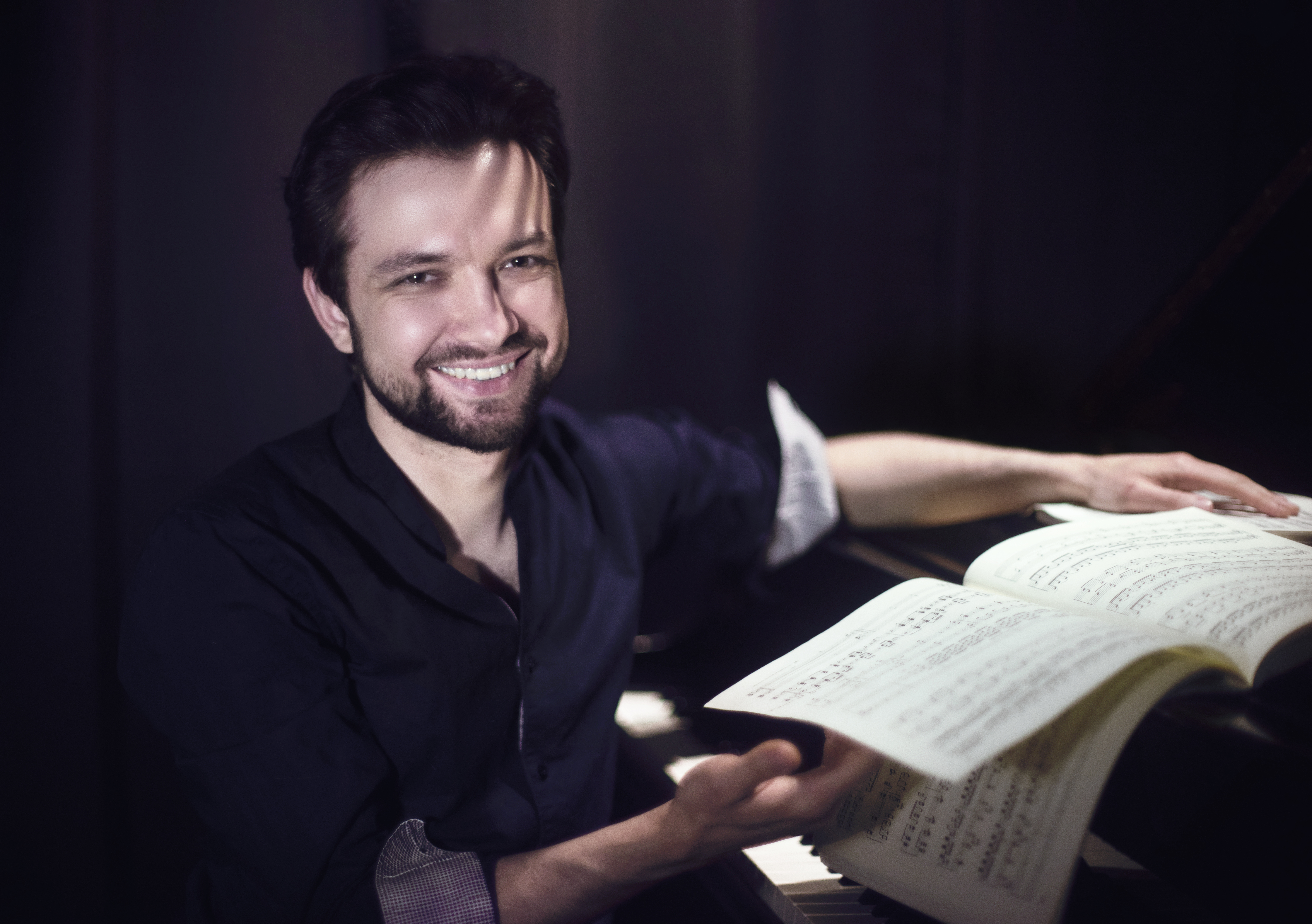
I am a concert pianist with 30 years of piano-playing experience. Despite having a robust and dexterous innate technique, I eventually discovered that it was not efficient enough to sustain a life-long performing career. After 15 years of intensive playing — 4–6 hours of daily practice and dozens of high-caliber programs per season — I encountered severe hand issues that forced me to stop performing for an entire year.
It was an incredibly difficult and painful time, but instead of giving up, I embarked on a journey to develop an ergonomic and safe piano technique. To achieve this, I:
- Experimented with my pain to understand its root causes.
- Attended workshops and took specialized courses in piano physiology.
- Consulted doctors who specialize in pianist injuries.
- Studied science-backed, modern, efficient approaches to piano playing.
Why It Matters to You
My experience has given me a profound ability to relate to students of all levels. I understand their struggles and can guide them in overcoming limitations to unlock their full potential. Over the years I have worked with hundreds of students of all ages and skill levels, many of whom sought help specifically to improve their technical efficiency — which has helped me identify the most common and challenging areas for learners.
The Creation of This Course
Inspired by my journey and motivated by a desire to help others avoid the same pitfalls, I spent a year planning, recording, editing, and preparing this comprehensive course. My goal is to provide the resource I needed years ago — a course that enables you to progress faster, avoid common mistakes, and benefit from my hard-earned insights.
Let’s embark on this journey together and unlock the pianist you are meant to be.
Sincerely, Denis Zhdanov
What Our Students Say
Testimonials
Eric
The piano rebuilding course has made a world of difference to me. I can now study the pieces I like without any pain in my hands and forearms. I was ready to give up piano altogether when I bought the course — and now I play more than ever.
Terry
Your course is the single most valuable collection of piano instruction I have ever seen, and it has substantially improved my playing over the last year. The relaxation and efficiency techniques are demonstrated again and again, until the proper way to practise them is thoroughly ingrained. You are a phenomenal teacher.
Pasquale
Denis's course is truly excellent: clear, in-depth explanations of all the fundamental techniques, along with practical work on real pieces. For those getting back into piano without a teacher, it isn't just an alternative — it's a complete and structured path. Within a few months I built a 30-minute repertoire of pieces I can play from start to finish.
Henrik
Believe me, this course is worth its weight in gold. After only a few days I could already feel that I play differently, with more freedom in my fingers and arms. And it would cost far more to get this from a professional piano teacher anyway.
Jonna
This is the course that has improved my playing the most in the shortest time — and I haven't even finished it yet. Bach really works magic on one's technique, and it transfers to other composers and styles as well. A great teacher.
Vicki
I've learned so much. The patient, bar-by-bar teaching style has helped me become much more confident in the piece. Analyzing the chords behind the melodies and working out hand positions goes miles towards better memorization. So glad I found this site.
Susanne
I'm retired and teaching myself to play the piano. The step-by-step breakdown of these wonderful exercises, combined with the tips on body, hand and finger movement and the analysis of the harmonies, is so welcome and so helpful.
Juan
I'm over 70 and pretty much a total beginner. In just two months I've made great progress: the course has helped me relax more, loosen up my arms and — most importantly — stay motivated to keep going.
Jesse
This is hands down the best lesson I have seen for learning this difficult piece. Every tip addresses a specific challenge — maintaining relaxed, comfortable sensations and releasing tension after each chord, even when the music feels like taming a wild horse. Bravo!
Maddie
A wonderful and educational course! I totally recommend it to anyone who needs an in-depth masterclass on this piece. Thank you, Maestro Denis.